Real Estate Site Planning and Feasibility Analysis Using GIS
Choosing the right land for a large real estate project is rarely straightforward. Developers often struggle with questions like: Is the site well connected? Are essential utilities nearby? Will infrastructure support future growth?
Relying only on spreadsheets or site visits can miss critical spatial relationships. This is where GIS-based mapping is increasingly becoming a practical solution for planners.

How GIS is Transforming Site Planning
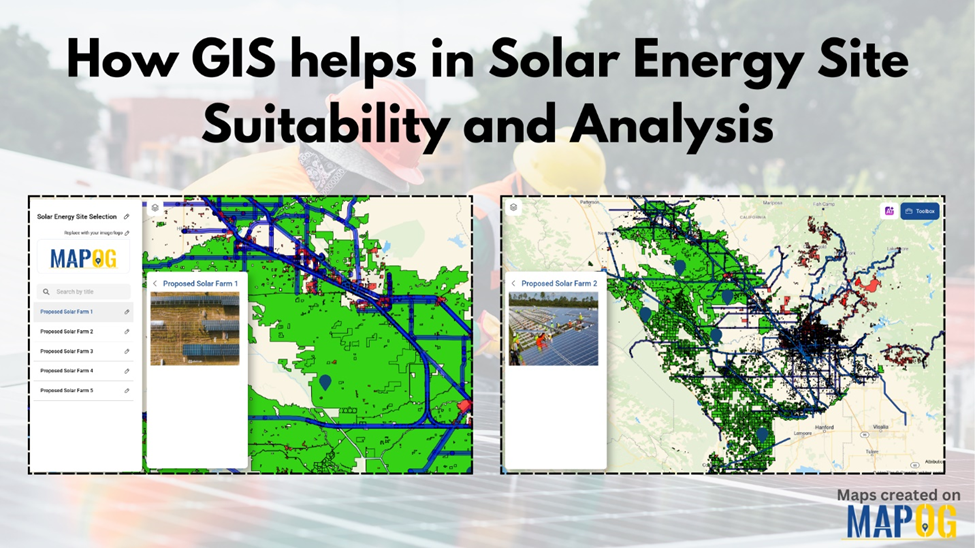
GIS (Geographic Information Systems) helps planners visualize land and infrastructure together on a single map. Instead of analyzing roads, pipelines, and powerlines separately, GIS allows you to layer them and understand how they interact spatially.
For example, a developer can:
Map a proposed site boundary
Overlay nearby roads, drainage systems, pipelines, and powerlines
Identify accessibility and infrastructure gaps instantly
This layered approach gives a clearer picture of whether a site is truly viable or just looks good on paper.
A Practical Approach Used by Planners
In real-world projects, planners often follow a structured GIS workflow. After uploading the proposed site location, they add infrastructure datasets like roads, pipelines, and utilities.
Using filters, they extract key features such as trunk roads and create a 500-meter buffer zone to evaluate accessibility. Similarly, powerlines are analyzed to ensure energy availability. For utilities like drains and pipelines, a 200-meter proximity check helps determine whether the site meets essential feasibility criteria.
Platforms that support interactive mapping—such as MAPOG—allow planners to perform these analyses visually, making it easier to interpret results and share insights with teams.

Why This Method Works
This GIS-based approach improves decision-making because it:
Reduces risk by identifying unsuitable locations early
Saves time compared to manual surveys alone
Improves accuracy with spatial data validation
Enhances collaboration through visual map sharing
For instance, if a site falls outside the buffer range of major roads or lacks nearby utilities, it can quickly be flagged as low feasibility—avoiding costly mistakes later.

Final Thoughts
Real estate planning is no longer just about location—it’s about context. GIS helps bring that context to life by connecting infrastructure, accessibility, and spatial data into one clear view.
Many planners are already using interactive mapping platforms to simplify this process and make smarter, data-driven decisions. Exploring these tools can give you a practical edge when evaluating your next project.